
The great cable game: why the Great Sea Interconnector project is on the brink
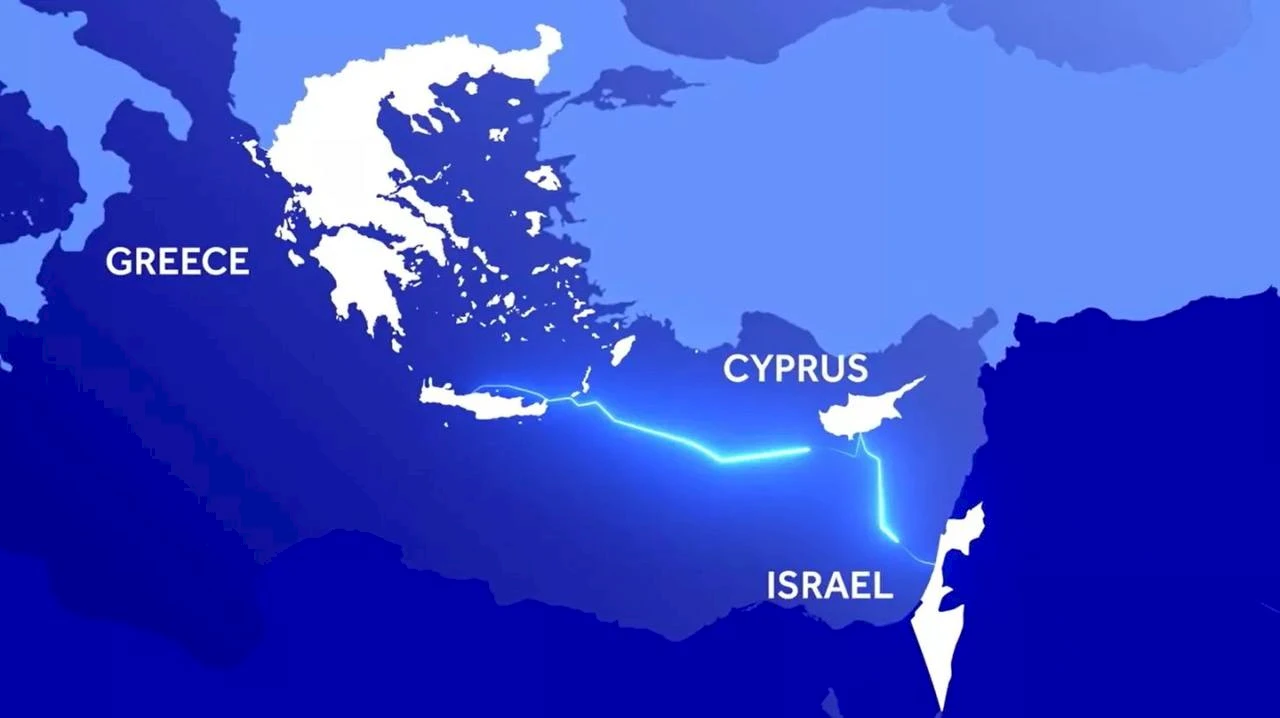
The Great Sea Interconnector (GSI) project, which aims to link the power grids of Greece, Cyprus and Israel, is increasingly resembling not so much an infrastructure initiative as a geopolitical drama on the island of Cyprus. Conceived as a solution to Cyprus's energy isolation, it has turned into a complex knot of economic calculations, political compromises and regional confrontation. Today, the project stands at a point where its fate is being decided: will it become a flagship of European energy integration or join the list of ambitious but unrealised initiatives?
The project that was supposed to change the region's map
The idea of connecting Cyprus to the European power grid has been discussed for over a decade. At the heart of GSI lies the earlier EuroAsia Interconnector concept, which was meant to link the Eastern Mediterranean with the EU energy network. For the Republic of Cyprus, this is not just infrastructure. It is a way out of energy isolation: the island remains the only EU country without an electrical connection to the continent. That is why the project received strong backing from the European Commission, which allocated €658 million for it. Moreover, ENTSO-E recognised GSI as the only project compliant with European legislation for connecting Cyprus.
A truce instead of a breakthrough
The past two years have seen tensions between Athens and Nicosia over the project. However, in 2025 the situation changed: the sides declared a de facto 'truce' and agreed to start over — by updating the feasibility study. This decision followed a meeting between Cypriot President Nikos Christodoulides and Greek Prime Minister Kyriakos Mitsotakis. Formally, the goal is simple: to check whether the project is viable under new economic conditions and to attract investors. But in practice, the decision has sparked opposing interpretations. In Cyprus, many saw it as a first step toward winding down the project. In Greece, conversely, as a necessary stage before launch.
A signal from the market: the project is not closed
An important indicator is business reaction. French industrial giant Nexans, one of the project's key contractors, has officially announced a revision of the work schedule. For a public company, such statements are not a formality. If the project were being shut down, it would be obliged to notify investors. In other words: the project is not cancelled, but it has been paused.
Why is the Great Sea Interconnector in Cyprus under threat?
The main problem with GSI is economics. The project's cost remains high, and its profitability is in doubt. Operating expenses could reach €50–60 million per year — a heavy burden for Cyprus's small energy market. Against this backdrop, alternatives are emerging. And the most sensitive of these is linked to Turkey.
The Turkish factor: a cheap alternative and a political dead end
Ankara is promoting its own cable project between Turkey and the northern part of Cyprus. According to estimates, it is:
- four times cheaper;
- technically much simpler;
- has minimal operating costs.
From an economic standpoint, this looks compelling. But there is one problem — politics. ENTSO-E has already made it clear: without the consent of the official operator of the Republic of Cyprus, such projects will not even be considered. This effectively blocks the Turkish scenario. Moreover, even within Turkey, it is acknowledged that such a project is 'politically impossible' without a change in Cyprus's status. Nevertheless, Ankara continues to use energy as a lever of pressure, promoting the 'two-state' concept and undermining the viability of alternative projects.
The story of GSI is not just about a cable on the seabed. It is a test for the European Union: is it willing to invest in strategic projects, even if they are expensive and complex?
Cyprus between economics and politics
The situation is complicated by the internal context on the island. Cyprus's economy is resilient, but its energy strategy is faltering. The launch of the LNG terminal is delayed, uncertainty is growing, and political pressure is intensifying ahead of parliamentary elections. In these conditions, the authorities' stance is becoming more cautious: Cyprus is ready to participate in the project — but 'not at any cost'. This reflects the key question: is it worth paying more for strategic independence than it can deliver in the short term?
What next in the Republic of Cyprus?
In the coming months, it will become clear which company will update the feasibility study. That document will determine the future of GSI. If the calculations confirm the project's viability, it could move to the implementation stage by the end of the decade. If not, it faces either radical reworking or freezing.
On one side — economic logic and risks. On the other — energy security and geopolitics. For now, the balance is not obvious. But one thing is clear: the Great Sea Interconnector is more than infrastructure. It is a line along which the boundary between politics and the market runs in modern Europe in Cyprus.
Key points:
- GSI is Cyprus's only chance to escape energy isolation within the EU.
- The project is not cancelled, but has been paused due to economic risks.
- The Turkish alternative is four times cheaper but politically blocked.
- An updated feasibility study in the coming months will decide the cable's fate.
- GSI has become a test for Europe: is it ready to pay for geopolitical independence?
Author

Born in the city of shipbuilders, Mykolaiv (Ukraine). Currently living in Moscow. Diplomat in reserve. More than 10 years of experience in the Mediterranean region (Greece, Cyprus). Until 2015, First Secretary of the Russian Embassy in Cyprus. Fluent in Greek and English. Completed civil service in…
