
Cyprus knot: EU seeks balance between war, energy, and money
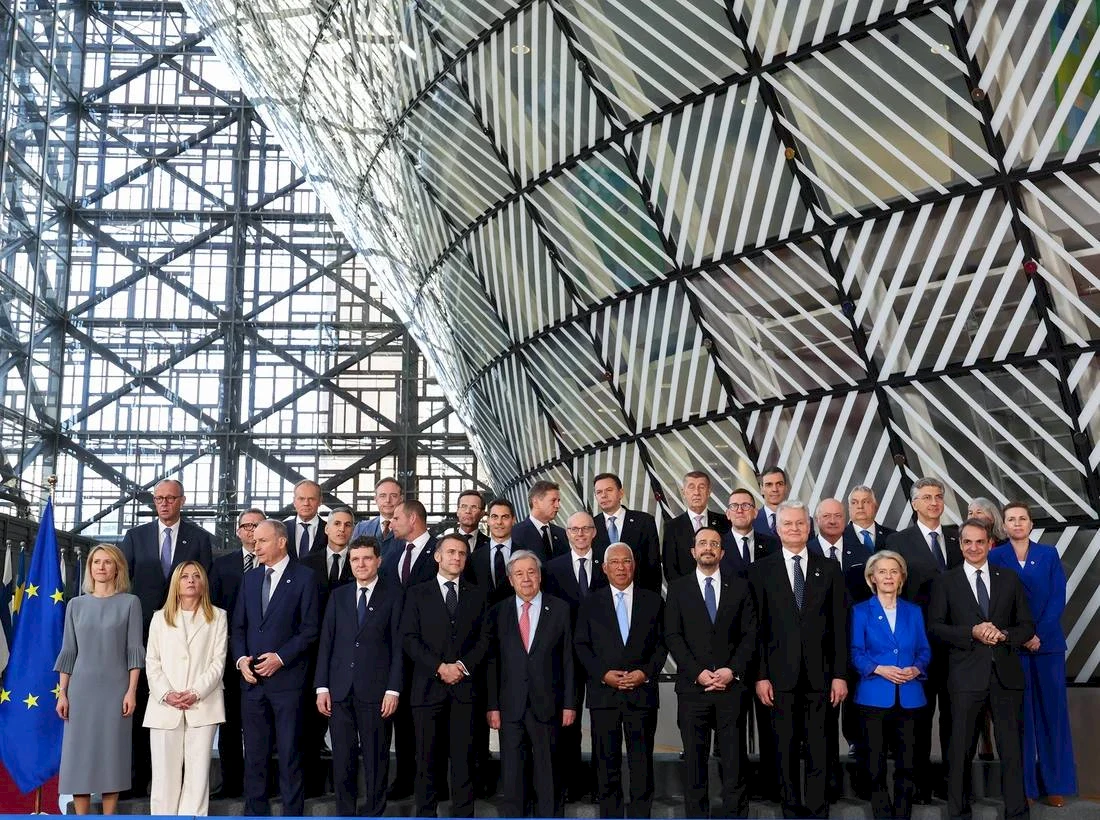
At the end of April, the European Union will gather for an informal summit in Nicosia — a meeting that looks less like a "working" session and more like an anti-crisis one. Invitations to the leaders of the 27 countries were sent by European Council President António Costa, outlining the agenda very clearly: geopolitics and money. But behind this phrasing, a much more complex picture is unfolding on the island of Cyprus.
Geopolitics as the new norm
The summit kicks off on April 23 with a discussion on Ukraine. President Volodymyr Zelenskyy will present an updated assessment of the situation — possibly remotely. However, the Ukrainian theme, despite its significance, is no longer the only one on the agenda.
The focus is rapidly shifting to the Middle East. Escalation around Iran and risks to the Strait of Hormuz — a key artery for global oil — pose not only a diplomatic but also an economic question for the EU. European leaders intend to discuss the Union's contribution to de-escalation, as well as ensuring freedom of navigation — a critically important element of global trade.
In fact, the EU is forced to act under conditions of a "polycrisis": supporting Ukraine, responding to Middle Eastern escalation, and protecting its own economy simultaneously.
What are the main energy problems in Cyprus and the EU?
Main challenges include the sharp rise in fossil fuel import prices and the need for urgent resource procurement coordination. European Commission President Ursula von der Leyen has already outlined the scale of the problem. According to her, in 44 days, EU spending on fossil fuel imports rose by more than 22 billion euros — without an increase in supply volumes. This means one thing: Europe is paying more for the same energy.
Even if the conflict in the Middle East is quickly de-escalated, which is not yet visible even in the first approximation, the consequences for prices and supplies will persist. Therefore, the European Commission is preparing an emergency package of measures to be presented just days before the summit.
Among the key steps:
- Coordination of gas purchases and storage filling;
- Joint use of strategic oil reserves;
- Temporary state support schemes for businesses and households;
- Acceleration of energy modernization and demand reduction.
The logic is simple: not only look for new energy sources but also consume less. As von der Leyen emphasized, “the cheapest energy is the one that is not consumed.”
Money and ambitions: the main dispute ahead
The second part of the summit is no less tense. It will concern the EU's multi-annual budget for 2028–2034. And here a key question arises: how to finance the Union's growing ambitions in the face of constant crises?
The budget discussion has already been postponed — initially due to foreign policy instability. But now, according to Costa, it has become even more urgent. The EU needs to synchronize:
- Defense spending;
- Energy transition;
- Economic support;
- Global competitiveness.
In fact, this is about rethinking the entire financial architecture of the EU.
The shadow of Article 42.7
Special attention may be given to Article 42.7 of the Lisbon Treaty — the mutual defense clause. Although its activation remains hypothetical, the very fact of the discussion shows that the EU is increasingly considering direct security threat scenarios.
This is an important signal. The Union, traditionally reliant on "soft power," is increasingly thinking in categories of hard security.
Why is the EU summit held in Cyprus?
The choice of location is due to the fact that the Republic of Cyprus is at the intersection of the European and Middle Eastern agendas, where geography literally coincides with politics. The informal nature of the meeting gives leaders more freedom for an honest exchange of views. Including with "key regional partners" invited to the working lunch.
Between crisis and transformation
The Nicosia summit could be a turning point. The EU is no longer reacting to crises individually — it is trying to build a systemic response. But the main challenge remains: how to simultaneously finance security, reduce energy dependency, and maintain economic resilience? There is no answer yet. And perhaps that is why the Cyprus meeting is informal in name only.
Summary findings:
- The Nicosia summit focuses on Ukraine, the Middle East, and the new EU budget.
- The European Commission is preparing emergency measures to stabilize energy prices.
- Strengthening collective security within the framework of Article 42.7 is being discussed.
- Cyprus serves as a strategic hub for dialogue between Europe and the Middle East.
Author
Born in the city of shipbuilders, Mykolaiv (Ukraine). Currently living in Moscow. Diplomat in reserve. More than 10 years of experience in the Mediterranean region (Greece, Cyprus). Until 2015, First Secretary of the Russian Embassy in Cyprus. Fluent in Greek and English. Completed civil service in…
You may also be interested in:
- Cyprus joined international operation against counterfeit medicines
- Evacuation of MV Hondius: passengers with hantavirus removed from Tenerife under strict control
- Cypriot President to address Greek Parliament for the first time in 16 years
- Cypriot President arrived in Abu Dhabi escorted by F-16 fighter jets
- Mass brawl in Ipsonas: five people in custody, police searching for 15 participants
