
Dancing Dervishes Museum in Lefkoşa: Mevlevi Tekke in Northern Cyprus
The Mevlevi Tekke Museum, or the House of the Whirling Dervishes, is located in the old city of Lefkoşa, right behind the Kyrenia Gate. In 2026, it remains one of the most convenient museums for a short walk through the capital of Northern Cyprus: a tour usually takes about 30–45 minutes. Before visiting, it is best to check the current opening hours, as the museum may be closed on weekends and public holidays.
- What is Mevlevi Tekke
- History of Mevlevi Tekke
- What to see inside the museum
- How to plan your visit
- How to get there
- Frequently Asked Questions
What is Mevlevi Tekke
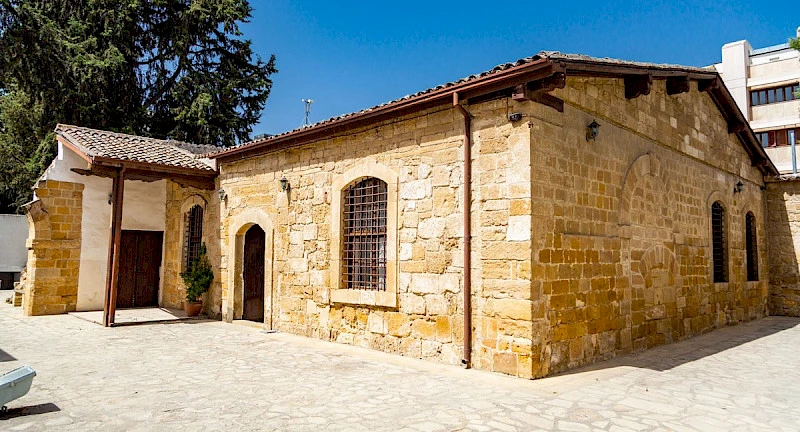
Mevlevi Tekke is a historical building in the İbrahimpaşa quarter of Lefkoşa, near the Kyrenia Gate. The Tekke was used as a place of spiritual retreat and assembly for the Mevlevi Sufi order, followers of Jalaluddin Rumi, also known as Mevlana.
Today, the building operates as a museum. Inside, you can see the hall for the Sema ritual, the tombs of the order's sheikhs, musical instruments, manuscripts, dervish costumes, household items, and Ottoman tombstones in the inner courtyard.
The museum is conveniently included in a walking route through old Nicosia, along with the Kyrenia Gate, Büyük Han, Bedesten, and the Selimiye Mosque.
History of Mevlevi Tekke
The Mevlevi Order was founded in Konya by the followers of the poet, theologian, and Sufi mystic Jalaluddin Rumi. The music and circular motion in the Sema ritual became one of the most recognizable elements of the Mevlevi tradition, which is why followers of the order are often called Dancing or Whirling Dervishes.
It is believed that the current Mevlevi Tekke building is connected to earlier tekkes known as the Arab Ahmed Pasha Tekke and the Ferhad Pasha Tekke. According to another version, the building was constructed as a separate Mevlevihane in the early 17th century.
In 1925, tekkes were closed in Turkey as part of Atatürk's reforms. In Northern Cyprus, the order's activities continued longer under British administration. After the death of Sheikh Muhammad Selim Dede in 1953, the tekke effectively ceased operations, and in 1956, the Mevlevi Order on the island was officially disbanded.
What to see inside the museum
The museum was opened in 1963 as the Ethnographic Museum of Turkish Cypriots. After restoration on December 17, 2002, it was reopened as the Mevlana Museum. The date December 17 is significant as it marks the anniversary of Rumi's death, which in Sufi tradition is called the day of his "union with the beloved."
The entrance to the museum is through an arched doorway. In the inner courtyard, carved Ottoman tombstones collected from various locations across Northern Cyprus are on display. Many of them date back to the 18th century.
The main room of the museum is the semahane, the hall where the Sema ritual was performed. Inside, there is also a niche indicating the direction of Mecca and a passage to the room containing the tombs of the Mevlevi sheikhs. In total, there are sixteen tombs under six domes.
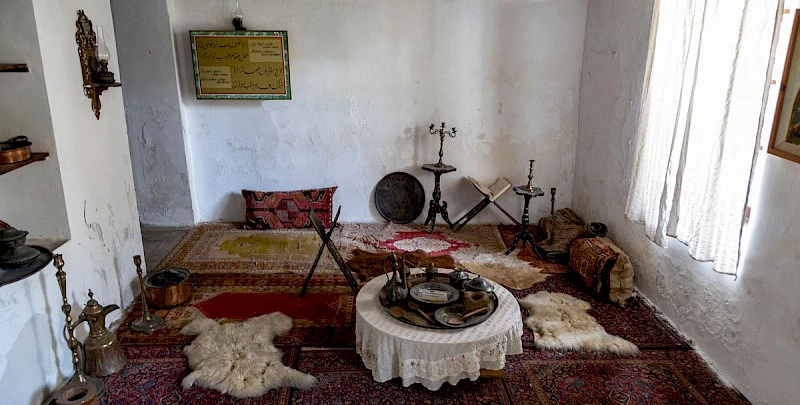
The exhibition features photographs of sheikhs, manuscripts, costumes, musical instruments, household items, and materials related to Rumi's poem "Masnavi." A separate section displays a preserved dervish cell with kitchen utensils, rugs, and everyday objects.
How to plan your visit
A tour of the museum usually takes 30–45 minutes. If you read the exhibits in detail and combine the visit with a walk through the old city, allow about 1 hour.
| Parameter | Information | Comment |
|---|---|---|
| District | Old Nicosia | Near the Kyrenia Gate |
| Visiting time | 30–45 minutes | Up to 1 hour with detailed viewing |
| Format | Museum | Exhibition without regular dervish shows |
| Opening hours | Usually daytime hours | It is better to check the current schedule before visiting |
| Tickets | At the entrance | Prices are subject to change |
On regular days, the museum functions as an exhibition space. Whirling dervish ceremonies are not a daily part of the visit. Special events are usually timed for December 17, but it is best to check the date, tickets, and format in advance with the organizers or on the Evkaf website.
Official website of the Cyprus Foundations Administration: evkaf.org.
How to get there
The museum is located right behind the Kyrenia Gate in old Nicosia. It can be reached by city bus, taxi, or on foot from the central part of the city. The nearest convenient stop is Girne Kapısı.
If you are traveling by car, it is most convenient to leave your vehicle at the Samanbahçe Oto Parkı paid parking lot opposite the museum.
For a route through Lefkoşa, you can combine the museum with other sites in the old city. More details: attractions of Northern Cyprus and museums of Northern Cyprus.
If you plan to travel across several cities in Northern Cyprus, you can compare car rental options via Localrent. For guided tour options, check Tripster.
Frequently Asked Questions
Where is the Whirling Dervish House-Museum located?
The museum is located in old Lefkoşa, right behind the Kyrenia Gate, in the İbrahimpaşa quarter.
How much time is needed to visit the museum?
30–45 minutes is usually enough. If you examine the exhibition in detail, allow about 1 hour.
Can I see the dervish dance at the museum?
On regular days, the museum operates as an exhibition. Whirling dervish ceremonies are held only on specific dates and events, most often around December 17.
How much does the entrance cost?
The entrance fee may change, so it is better to check the current price on-site or with the organizers before your visit.
When is the museum open?
The museum is usually open during daytime hours, but the schedule may change on weekends, holidays, and during events. It is best to check the current schedule before your trip.
Where to park near the museum?
A convenient option is the Samanbahçe Oto Parkı paid parking lot opposite the museum.
What to see nearby?
Nearby are the Kyrenia Gate, Büyük Han, Bandabuliya Market, Bedesten, and the Selimiye Mosque.
Author

I am a person who is not afraid to change life when my heart tells me that something greater lies ahead. I am originally from Belarus. I have journeyed from pedagogical and economic education to the financial sector and many years of work in logistics — a world where everything moves, changes,…