
General situation: Structural shock for the aviation industry
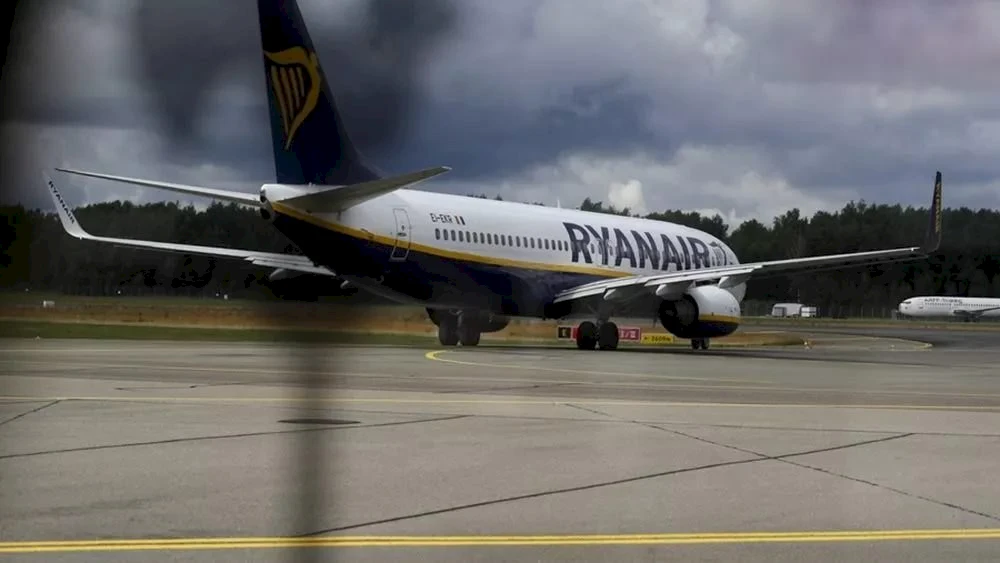
General situation: Structural shock for the aviation industry
The military conflict in the Middle East, involving Iran and escalation near the Strait of Hormuz, has become one of the most significant pressure factors on the global aviation industry in recent years. This is not a short-term price spike, but a systemic supply shock affecting multiple links in the global chain — from oil extraction to jet fuel supply.
The threat to routes through the Strait of Hormuz disrupts oil exports from the Persian Gulf, directly impacting jet fuel production. As a result, jet fuel prices in Europe have already exceeded $200 per barrel, while fuel production in Asia has decreased by more than 500,000 barrels per day.
An additional pressure factor is Europe's high dependence on fuel imports — up to 40% of consumption is covered by external supplies, a significant portion of which passes through vulnerable logistical routes.
In effect, the aviation industry finds itself in a situation of simultaneous increases in raw material costs, logistical expenses, and supply constraints.
Aviation market reaction: Supply reduction and price increases
Airlines are responding to the crisis in a classic way — by reducing supply and passing costs onto the end consumer.
The market is already recording a reduction in summer capacity by approximately 4%, equivalent to the disappearance of about 9.3 million seats from schedules. Simultaneously, major carriers are mass-canceling unprofitable flights, especially on short European routes, and decommissioning less efficient aircraft.
Some companies are even considering operational route changes, including intermediate refueling stops, indicating a deep restructuring of logistics.
Rising prices are a direct consequence of this adaptation. International flights have become roughly 16% more expensive, while domestic flights have risen by up to 24%. Additionally, fuel surcharges are being introduced, which on long-haul routes can reach hundreds of dollars per ticket.
Budget airlines remains the most vulnerable segment. Their business model is based on minimal margins and high seat occupancy, making them particularly sensitive to rising fuel costs. Under crisis conditions, bankruptcies, restructurings, and the disappearance of ultra-low fares as a class are increasing.
Regional dynamics: Where the crisis hits hardest
Asia is becoming the most affected region. It is simultaneously experiencing a decline in fuel production and a high dependence on supplies through the Strait of Hormuz. Competition for limited volumes of jet fuel is intensifying, further driving up prices.
The European market faces a different problem — structural dependence on imports. The reduction in oil refining capacity in recent years has lowered the system's resilience. Consequently, Europe reacts quickly to global price fluctuations.
The US demonstrates a different type of vulnerability. Here, the key factor is the financial strategy of airlines: the refusal to hedge fuel makes carriers more sensitive to price spikes. This leads to a sharp increase in operating expenses, measured in billions of dollars.
Passing costs to the consumer
The increase in costs is almost entirely translated into airfare prices. Airlines use several adaptation mechanisms: fuel surcharges, increases in base fares, higher additional fees for luggage and seat selection, and the reduction of cheap fare classes.
As a result, a new price reality is forming, in which airfare levels may remain elevated even with potential stabilization of the oil market.
Summer season prospects: Cyprus
One of the key destinations for the summer season remains Cyprus, traditionally one of the main low-cost tourism markets in Europe.
The market is already showing early signs of price pressure. There is a reduction in the number of promo fares, an increase in average ticket costs by 10–25% compared to last year, and an acceleration of early bird sales. Price increases are noticeable on flights to Larnaca and Paphos — the island's most popular tourist spots.
Truce maintenance scenario
If the geopolitical situation remains stable, the market will likely move into a "high plateau" mode. This means that prices will consolidate at the new level without further sharp increases.
In such a scenario, airfares to Cyprus could increase by approximately 10–20% compared to last year. Low-cost carriers will maintain their presence on routes, but aggressive discounts and ultra-cheap offers will become rare. The peak season will remain expensive but relatively predictable in terms of price structure.
Escalation resumption scenario
In the event of a new flare-up of the conflict and further disruptions to supplies through the Strait of Hormuz, the market may enter a phase of sharp turbulence.
For Cyprus, this will mean airfare price increases of 25–50% or more on peak dates, a reduction in cheap offers from low-cost carriers, and increased price volatility even within a few days. Targeted flight cancellations on less busy routes are also possible.
In such a scenario, the availability of budget flights during high season will significantly decrease, and the cost of travel will become much less predictable.
The aviation industry is entering a phase of structural transformation caused by energy and geopolitical shocks. The main consequences are already evident: supply reduction, rising prices, and increased dependence of the aviation market on the foreign policy situation.
For passengers, this means a shift to a new model of travel planning, where the key factor is not just the choice of destination, but the timing of ticket purchase.
For the market, a new price base is being formed, which may persist even after partial stabilization of the conflict and normalization of fuel supplies.
Author

Born in the city of shipbuilders, Mykolaiv (Ukraine). Currently living in Moscow. Diplomat in reserve. More than 10 years of experience in the Mediterranean region (Greece, Cyprus). Until 2015, First Secretary of the Russian Embassy in Cyprus. Fluent in Greek and English. Completed civil service in…
You may also be interested in:
- In Larnaca, unknown individuals shot kittens with pneumatic weapons
- Greece and Cyprus strengthen alliance amid regional challenges
- Energy shock in the Eurozone: risks and consequences for Cyprus
- Parliamentary elections in Cyprus to cost 6 million euros
- Oceana urges Cyprus to strengthen control over vessels under 'flags of convenience'
