
Snakes in Northern Cyprus: Capture Contacts, Species and Safety
There is no separate state-run “snake capture service” in Northern Cyprus, but rescuers and specialized organizations provide assistance. Below are the contacts, snake species, and practical answers to common questions, including safety precautions and what to do when you encounter a snake.
- Snake capture contacts in Northern Cyprus
- Snake species in Northern Cyprus
- Common questions about snakes
Snake capture contacts in Northern Cyprus
The general recommendation is to call the rescue service 199.
Specialized contacts:
- +90 548 811 11 90 — Northern Cyprus wildlife research institute. There are specialists in snake capture. (WhatsApp)
- +90 548 811 11 50 — alternative number for the institute. (WhatsApp)
- +90 533 870 04 42 — additional contact where they may be able to help. (WhatsApp)
You can also contact local pest control services, which can be found on Google Maps by searching for Pest Control.
Also read: the most important phone numbers and addresses in Northern Cyprus
Snake species in Northern Cyprus
The following snakes are found in Northern Cyprus:
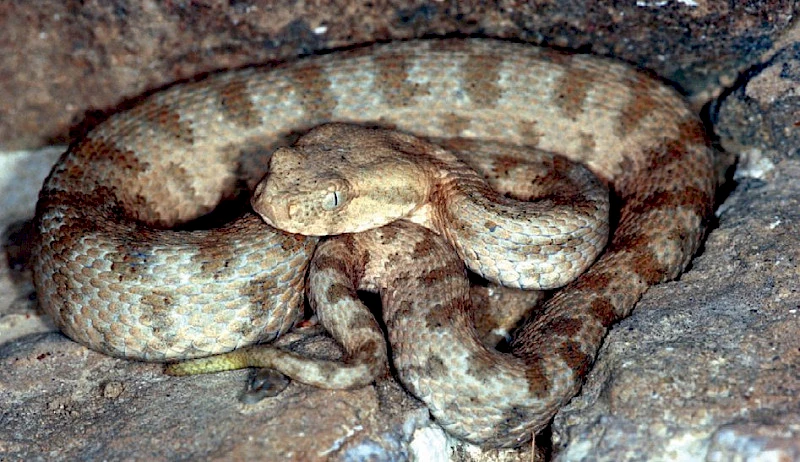
- Gurza - the only snake whose dangerous bite can be potentially fatal to a person (the Cyprus blunt-nosed viper is shown in the photo)
- Cat snake
- Lizard snake
- Grass snake
- Mediterranean grass snake
- Cyprus snake
- Lead-coloured racer
- Worm snake
- Large racer
For more detailed information about snakes, you can see our overview of Cyprus snakes.
Common questions about snakes in Cyprus
When are snakes most active?
In spring, when they emerge from winter hibernation and the mating season begins. In summer, activity decreases during the daytime heat, but increases at night when the temperature drops.
Are there any deadly venomous snakes in Cyprus?
The only snake whose dangerous bite can be potentially fatal to a person is the Cyprus blunt-nosed viper. If medical help is sought promptly, treatment is provided.
When do snakes attack people?
Snakes do not attack without reason. Aggression is a reaction to a threat (stepped on, tried to catch/touch). They strike prey (small animals) for food, and people only when provoked.
How can you protect yourself from snakes on your property?
Keep the area well maintained: remove tall grass, weeds, rubbish, and rodent shelters. Store animal feed and rubbish in closed containers, and eliminate access to water (spilled water, water bowls on the ground).
Are snake repellents effective?
Repellents are considered of limited effectiveness and may harm the environment. Prevention and landscaping the area are much more effective.
What should you do if you see a snake near your home?
Keep a distance of at least 2–3 m, do not try to catch it. Bring pets indoors and make sure children do not go near it. Call 199 or the contacts listed above and observe its movement from a safe distance.
First aid for a snakebite (briefly):
Stay calm, limit movement of the affected limb, and remove rings/watches (swelling is possible). Do not cut the wound, do not suck out the venom, do not apply a tourniquet, do not apply ice, and do not drink alcohol. Seek medical help immediately; if possible, call 199 or arrange transport to the nearest hospital.
Safety when walking in nature:
Wear closed shoes and long trousers, watch where you step and where the grass is, do not put your hands into burrows/cracks/under stones, and use a flashlight at night. If possible, stay on trails.
Follow our social networks: Instagram and Telegram channel — we regularly write about safety in Northern Cyprus.
Author

I am a person who is not afraid to change life when my heart tells me that something greater lies ahead. I am originally from Belarus. I have journeyed from pedagogical and economic education to the financial sector and many years of work in logistics — a world where everything moves, changes,…
You may also be interested in:
- Where to Buy Home Appliances in Northern Cyprus in 2026
- Pet Hotels for Dogs and Cats in Northern Cyprus in 2026
- Where to buy firewood in Northern Cyprus: prices, contacts, tips
- Fire services in Northern Cyprus: phone numbers and addresses
- Freight transport and moving services in Northern Cyprus — list of companies, tips, and contacts